

In a world buzzing with clutter and chaos, the minimalist living room design stands as a serene oasis. Imagine stepping into a space where every piece of furniture has a purpose and every item is a statement. It’s like giving your home a much-needed spa day—who wouldn’t want that?
Minimalism isn’t just about less stuff; it’s about more breathing room and freedom from the overwhelming excess. With clean lines and a focus on functionality, minimalist design transforms a living area into a stylish retreat. So why not trade in that mountain of throw pillows for a sleek couch that actually fits? Embrace the art of simplicity and discover how a minimalist living room can elevate your lifestyle while keeping your sanity intact.
What Is Minimalist Living Room Design?
Minimalist living room design focuses on simplicity and functionality. Spaces prioritize essential elements over decorative clutter. Purposeful furniture choices enhance the overall aesthetic and usability of the room. Clean lines contribute to an open, airy feel that fosters tranquility.
Incorporating a limited color palette further emphasizes the minimalist approach. Neutral tones create a calming atmosphere, while strategic pops of color can add interest without overwhelming the senses. Every item in a minimalist living room serves a specific purpose, enhancing the experience rather than detracting from it.
Furniture selection plays a crucial role in achieving a minimalist look. Choosing sleek, unembellished pieces promotes a sense of order and cohesion. Multi-functional furniture, like storage ottomans, maximizes utility while minimizing the number of items in the space.
Lighting also impacts minimalist design. Natural light is preferred, as it brightens the room and creates a lively ambiance. When natural light isn’t available, strategically placed fixtures offer practical illumination without overpowering the room’s simplicity.
Minimalist decor highlights space, allowing for a more profound appreciation of each item. Selecting one or two statement pieces can draw attention and spark conversation, maintaining aesthetics without excessive adornment. Each design choice should align with the goal of enhancing peace and clarity.
This design philosophy shifts attention away from material possessions and encourages mindful living. Embracing a minimalist lifestyle often leads to reduced stress and increased mental clarity. Spaces designed with purpose foster relaxation, making the minimalist living room an ideal retreat from busy life.
Key Principles of Minimalism
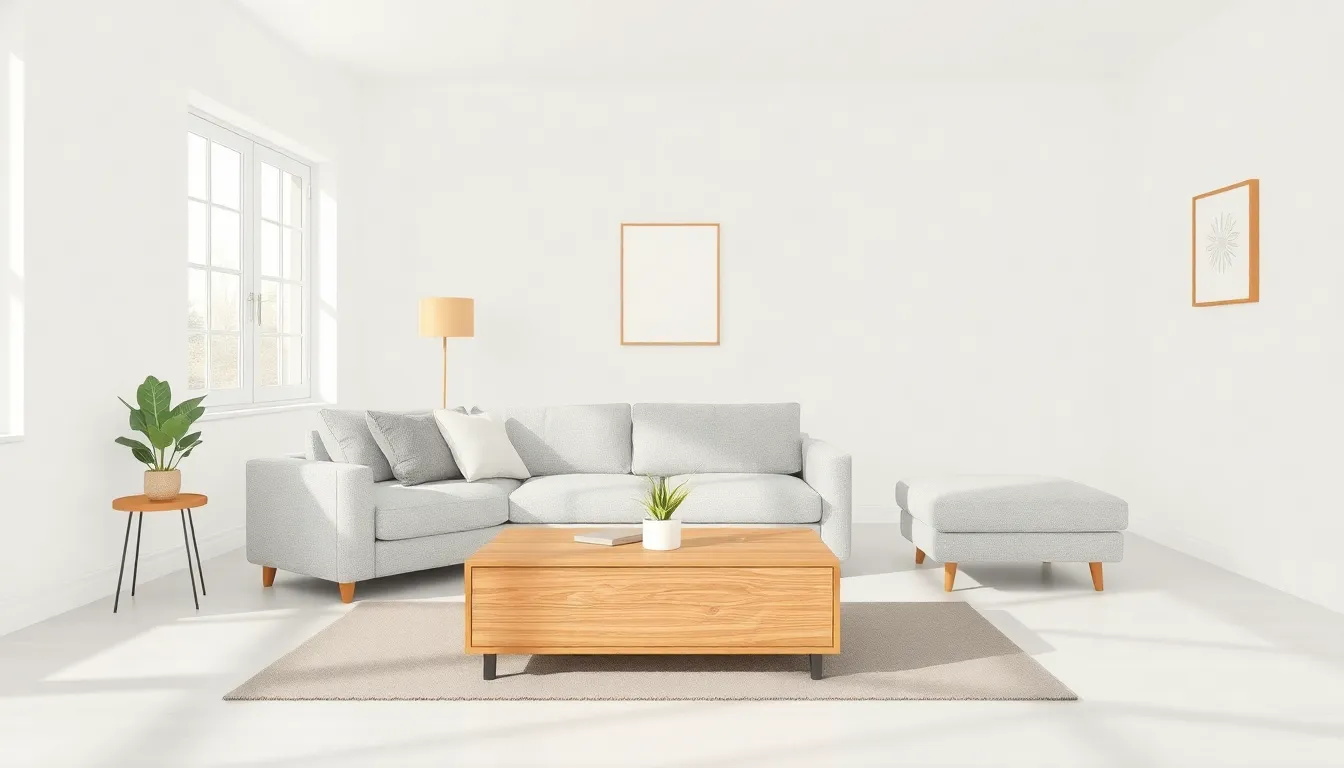
Minimalism in design revolves around a few core principles that elevate a space’s tranquility. This approach emphasizes function and simplicity, ensuring every element serves a purpose.
Functionality
Designing a minimalist living room requires careful consideration of functionality. Furniture choices play a crucial role in enhancing utility. Multi-functional pieces, such as a coffee table with storage or a sofa bed, maximize efficiency without overwhelming the space. Each item should cater to daily needs while providing comfort. This emphasis on practicality allows for a streamlined environment, reducing distractions and promoting relaxation.
Simplicity
Simplicity stands as a fundamental aspect of minimalist design. Clean lines and a thoughtful layout prevent visual clutter and create order. Selecting essential items means avoiding excessive decorations that contribute little to the overall aesthetic. A limited color palette featuring neutral tones maintains a soothing atmosphere, while occasional pops of color can highlight key features. Prioritizing simplicity facilitates a calm and inviting living room, essential for a peaceful environment.
Space
Space management proves vital in minimalist living room design. Open areas foster a sense of freedom, allowing light to flow and enhancing the room’s appeal. Decluttering surfaces and walls keeps the focus on the remaining elements, creating a more spacious feel. Every corner should feel purposeful without compromising flow. By valuing space, the design promotes an airy and serene setting that encourages mindfulness and relaxation.
Essential Elements of a Minimalist Living Room
Minimalist living rooms thrive on simplicity and clarity. Key elements contribute to an inviting and calming space that upholds the minimalist philosophy.
Color Palette
A limited color palette defines the essence of a minimalist living room. Neutrals like whites, grays, and beiges create a serene backdrop. Occasional pops of color serve as focal points, bringing in warmth and interest. This balance enhances visual tranquility while ensuring harmony throughout the room. By choosing soft shades, the ambiance feels open and airy. The thoughtful use of color helps prevent overwhelming feelings typical of cluttered spaces.
Furniture Selection
Purposeful furniture selection remains crucial in minimalist design. Multi-functional pieces save space while serving specific functions. For instance, a sleek coffee table doubles as storage, streamlining the environment. Unembellished sofas and chairs maintain clean lines that emphasize simplicity. Selecting furniture with natural materials contributes to an organic feel. Each item should enhance the overall aesthetic without drawing attention away from the room’s tranquility.
Decor and Accessories
Minimalist decor thrives on the absence of excess. One or two statement pieces, like an artwork or a unique vase, can define the space without clutter. Simplicity in decor allows for deeper appreciation of individual items. Textures can add warmth while maintaining a minimalist ethos, using materials like wood or soft fabrics. Accessorizing sparingly ensures that every piece holds significance. By focusing on functionality and beauty together, the room radiates a sense of calm and order.
Benefits of Minimalist Living Room Design
Minimalist living room design promotes a serene environment and enhances daily living experiences. The focus remains on essential components, leading to numerous advantages.
Aesthetic Appeal
Aesthetic appeal stands out in minimalist living rooms. Clean lines and a limited color palette create a visually pleasing atmosphere. Neutral tones integrate harmoniously, while strategic pops of color add interest. Purposeful furniture selection emphasizes form and function, enhancing overall beauty. Simplicity allows each piece to shine, resulting in a cohesive and sophisticated look.
Improved Focus and Clarity
Improved focus emerges in minimalist settings. Fewer distractions foster a tranquil environment, supporting mental clarity. By prioritizing essential items, individuals can better appreciate their surroundings. Simplified spaces encourage mindfulness, leading to enhanced productivity and reduced stress levels. The absence of clutter clears the mind, promoting a sense of order and control.
Better Organization
Better organization is another significant benefit of minimalist living room design. A streamlined approach facilitates efficient use of space. Multi-functional furniture items enhance utility while maintaining an orderly appearance. Regularly assessing belongings ensures that only meaningful items occupy the space. A well-organized environment simplifies routines, making it easier to locate items and maintain serenity.
Embracing minimalist living room design transforms spaces into serene retreats that promote clarity and mindfulness. By prioritizing functionality and simplicity, individuals can create environments that enhance their daily lives. Purposeful furniture choices and a thoughtful layout not only reduce visual clutter but also elevate the aesthetic appeal of the room.
The minimalist approach encourages a deeper appreciation for each item, fostering a sense of calm and order. With the right balance of colors and textures, a minimalist living room becomes a sanctuary that nurtures relaxation and focus. Ultimately, this design philosophy leads to a more intentional lifestyle where beauty and tranquility coexist seamlessly.