
In a world overflowing with stuff, found object creativity turns everyday trash into treasures. Imagine transforming an old shoe into a quirky planter or a rusty bike into a stunning sculpture. It’s not just art; it’s a playful rebellion against the mundane.
Overview of Found Object Creativity
Found object creativity transforms discarded materials into original art pieces. Artists utilize items like old shoes, rusty bikes, and broken electronics to craft unique sculptures, installations, or functional artworks. This artistic practice encourages viewers to rethink waste and recognize potential beauty in overlooked objects.
Repurposing everyday trash into artistic treasures challenges conventional artistic norms. Instead of purchasing expensive materials, creators source items from their surroundings. They inspire others to embrace sustainability and innovation, breathing new life into forgotten objects. By doing so, artists foster a connection between people and the environment.
Many well-known artists focus on this type of creativity. Marcel Duchamp’s readymades, for example, elevated mundane objects to art status, sparking a dialogue about the definition of art. Contemporary artists like El Anatsui and Robert Rauschenberg also incorporate found objects into their work, showcasing the versatility and cultural significance of these materials.
Communities increasingly embrace found object creativity as a means of artistic expression and environmental responsibility. Workshops and art programs promote this practice, allowing participants to engage with their surroundings and develop new skills. These initiatives foster collaboration, sparking conversations on sustainability and creativity.
Found object creativity emphasizes resourcefulness and imagination, inviting everyone to explore their artistic potential. By engaging with discarded materials, artists and enthusiasts create meaningful connections that transcend traditional definitions of art.
Historical Context
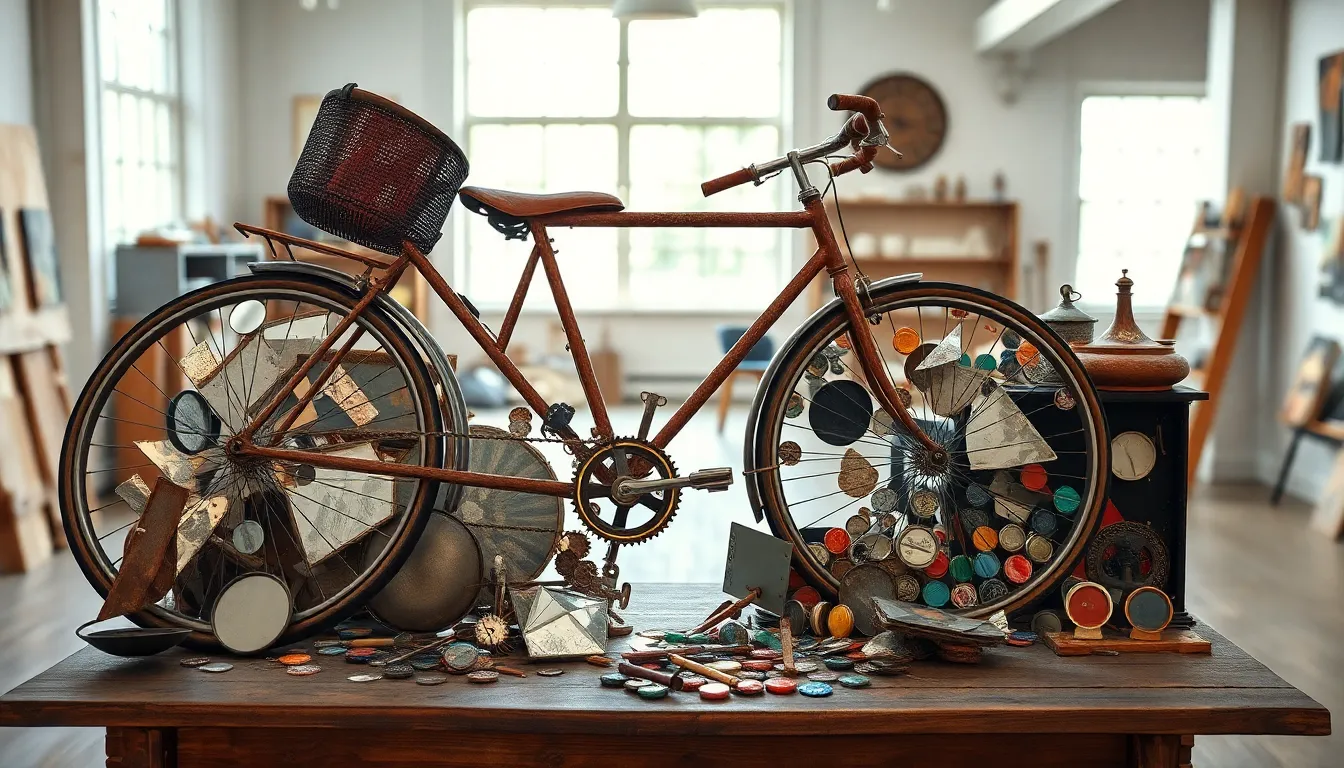
Found object creativity has roots in the early 20th century, when artists sought to challenge traditional notions of art. This movement arose from the desire to elevate everyday materials to artistic status, questioning the value placed on conventional mediums.
Origins of Found Object Art
Surrealism and Dadaism laid the groundwork for found object art. Artists in these movements, such as Marcel Duchamp, explored how ordinary items could provoke thought and stimulate discussion. Duchamp’s “Fountain,” a signed urinal, exemplified the shift towards using objects from everyday life as art. By the 1950s, this concept gained traction in the U.S. with assemblage artists reshaping the way people viewed discarded items. Notably, El Anatsui began using bottle caps to create intricate tapestries, showcasing the artistic potential in what many consider waste.
Influential Artists in the Movement
Numerous artists contributed to the evolution of found object creativity. Robert Rauschenberg is recognized for his “Combines,” merging painting and sculpture with everyday items. His work highlighted the blend of fine art and consumer culture. Meanwhile, Joseph Cornell created intriguing boxes filled with collected objects, igniting curiosity and narrative in his pieces. Each artist brought unique perspectives, prompting society to reconsider the concept of beauty in the overlooked. As a result, their contributions shaped the discourse on what constitutes art, paving the way for future generations.
Techniques in Found Object Creativity
Found object creativity relies on innovative techniques for transforming everyday materials into art. Artists explore various methods to breathe new life into discarded items.
Combining Materials and Forms
Combining different materials can create unexpected visual effects. Artists frequently merge fabric, metal, wood, and plastic to develop unique sculptures. Some create texture contrast by juxtaposing smooth items with rough ones. Assemblages may include household objects, mechanical parts, or natural elements. The mix encourages individuality in each piece. This technique highlights the versatility of found objects, showcasing their potential to tell stories visually. El Anatsui exemplifies this approach by uniting bottle caps into stunning tapestries.
The Role of Imagination
Imagination drives the heart of found object creativity. Artists envision new purposes for discarded items, transforming waste into artworks. Connecting to personal experiences enhances artistic expression; they often convey emotions through their creations. Various techniques like reshaping, painting, or assembling foster inventiveness. The process involves seeing beauty in the overlooked, inviting viewers to engage with art on a deeper level. Marcel Duchamp’s pieces challenge conventional perceptions, prompting audiences to reflect on the meaning behind everyday objects. This imaginative approach encourages collective dialogue about sustainability and innovation in art.
Impact on Contemporary Art
Found object creativity significantly influences contemporary art. This movement challenges artistic conventions by redefining what constitutes art in today’s society.
Challenging Traditional Art Forms
Artists frequently question established norms through found object creativity. By incorporating everyday items into their work, they disrupt traditional aesthetics. Marcel Duchamp’s “Fountain” exemplifies this disruptive approach, presenting a urinal as an art form. Assemblage artists further challenge ideas by blending personal narratives with discarded materials. Many contemporary artists favor this method to provoke thought and dialogue about consumerism and waste. The choice of materials often reflects cultural or social issues, prompting people to reconsider their relationship with objects. Through these transformations, found object creativity promotes an expansive definition of art.
Found Object Creativity in Modern Installations
Modern installations often highlight the versatility of found objects. El Anatsui’s large-scale tapestry-like works made from bottle caps illustrate how mundane items create powerful visual statements. Artists create immersive environments using reclaimed materials, inviting viewers to engage directly with their surroundings. Many installations encourage interactive experiences, asking participants to reconsider how they perceive waste. Found object creativity adds layers of meaning in these spaces, making spectators part of the artwork. This approach not only facilitates storytelling but also fosters community engagement and awareness. Overall, these installations showcase the potential of everyday materials to inspire and connect people.
Found object creativity stands as a powerful testament to the potential of everyday materials. It invites artists and viewers alike to embrace resourcefulness and challenge conventional perceptions of beauty. By transforming discarded items into captivating art, this movement not only sparks imagination but also fosters a deeper connection with the environment. As artists continue to innovate and push boundaries, found object creativity will undoubtedly inspire future generations to see the extraordinary in the ordinary. Embracing this art form encourages everyone to explore their creativity and redefine the meaning of art in contemporary society.